

Finding Calm Amid Cash Worries: Steps to Ease Financial Stress
(By Grant Winrich)(For Atlanta Holistic Mental Health & Wellness Holistic Mental Health & Wellness)
By Grant Winrich
(Financial-Literacy.info)
(grant@financial-literacy.info)
-
Busy parents juggling childcare and work schedules, hourly workers balancing uneven paychecks, and mid-career adults carrying credit card balances often face the same core tension: bills keep coming while breathing room keeps shrinking.
-
That pressure rarely stays on the spreadsheet, financial stress impact shows up as irritability, worry, sleep disruption, and other mental health challenges that make everyday decisions feel heavier. The emotional effects of debt can also trigger shame or avoidance, which quietly compounds the problem.
-
Treating financial wellness importance as part of stress management for adults helps protect mental health when money feels tight.
Understanding the Money and Mental Health Link
-
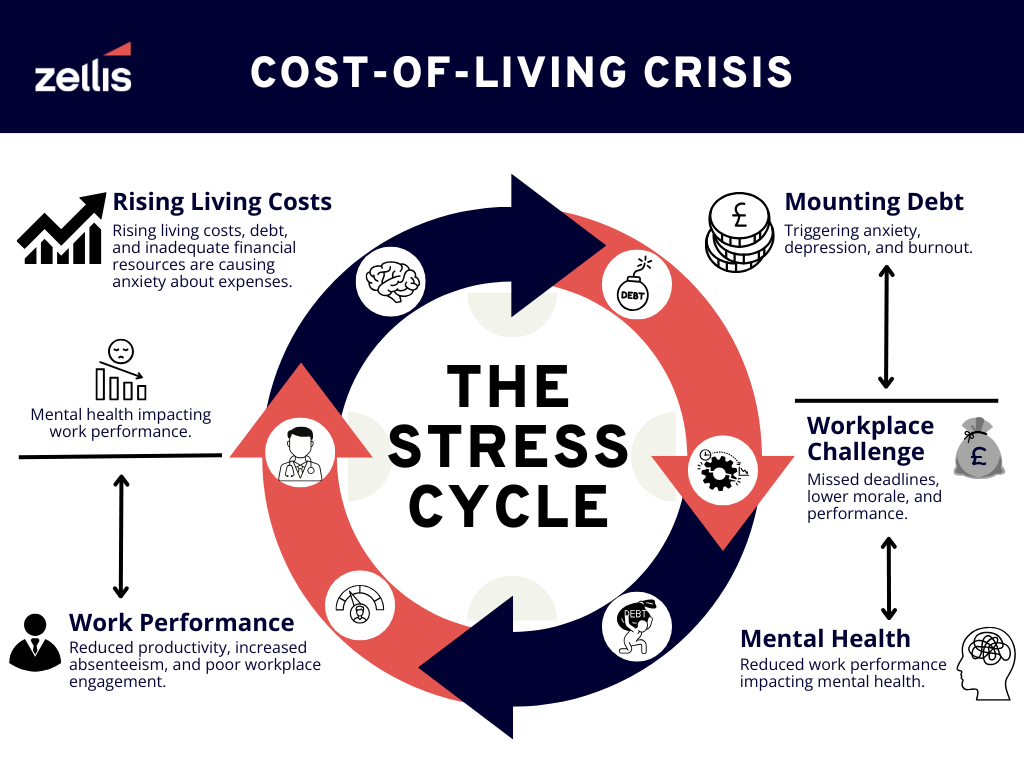
Money pressure often starts as a numbers problem, but it quickly becomes a body-and-brain problem. The financial stress and mental health link is a feedback loop where worry fuels physical stress, and that stress makes money decisions harder.
-
Sleep is a common early warning sign. Research has linked financial strain with lower sleep efficiency, which can leave you foggy, reactive, and less patient the next day. Over time, that pattern can show up as headaches, stomach issues, or a constant sense of alertness.
-
Picture checking your bank balance at night, then replaying bills in your head until 2 a.m. The next morning, you snap at a partner, skip breakfast, and avoid opening a new notice. Avoidance reduces clarity, and reduced clarity increases fear.
-
With this pattern clear, liquidity options like selling a life policy become easier to evaluate calmly.
Consider a Life Settlement as a One-Time Cash Option
:max_bytes(150000):strip_icc()/understanding-and-preventing-financial-stress-3144546_final1-6d778f5604df4e3fa8fcb6831c6b72fd.png)
-
When money pressure starts to feel relentless, having access to a single, meaningful source of cash can ease the emotional load and create breathing room.
-
For some policyowners, selling an in-force life insurance policy through a life settlement can provide a lump-sum payment that helps relieve financial strain, offering more flexibility and reducing stress during a difficult stretch. This approach differs from traditional loans or withdrawals because it’s a one-time liquidity event tied to transferring the policy rather than borrowing against it.
-
That said, it’s a decision to weigh carefully: you’re giving up all or part of the policy’s death benefit, which may affect loved ones and long-term plans. Before moving forward, it’s wise to seek professional guidance so you understand the tradeoffs.
-
If you explore this route, consider working with a life-settlement broker who represents policyowners as a fiduciary. A broker can manage the process end-to-end, pursue competitive offers from multiple buyers, and typically charges no upfront fees, earning a commission only if the settlement closes, while allowing you to cancel at any time. To start researching and comparing reputable options, review lists of top life insurance policy buyers.
-
From there, building a calmer day-to-day money routine can help you reduce stress in more sustainable ways.
Build a Stress-Reducing Money Routine: 6 Practical Moves
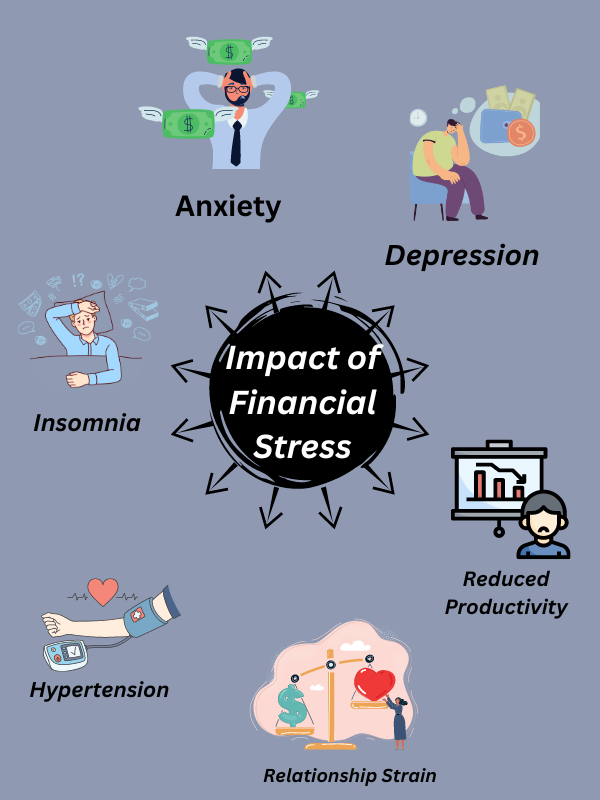
Financial stress thrives in the unknown. A steady money routine replaces vague worry with small, repeatable actions, so decisions feel clearer, even when your numbers aren’t perfect yet.
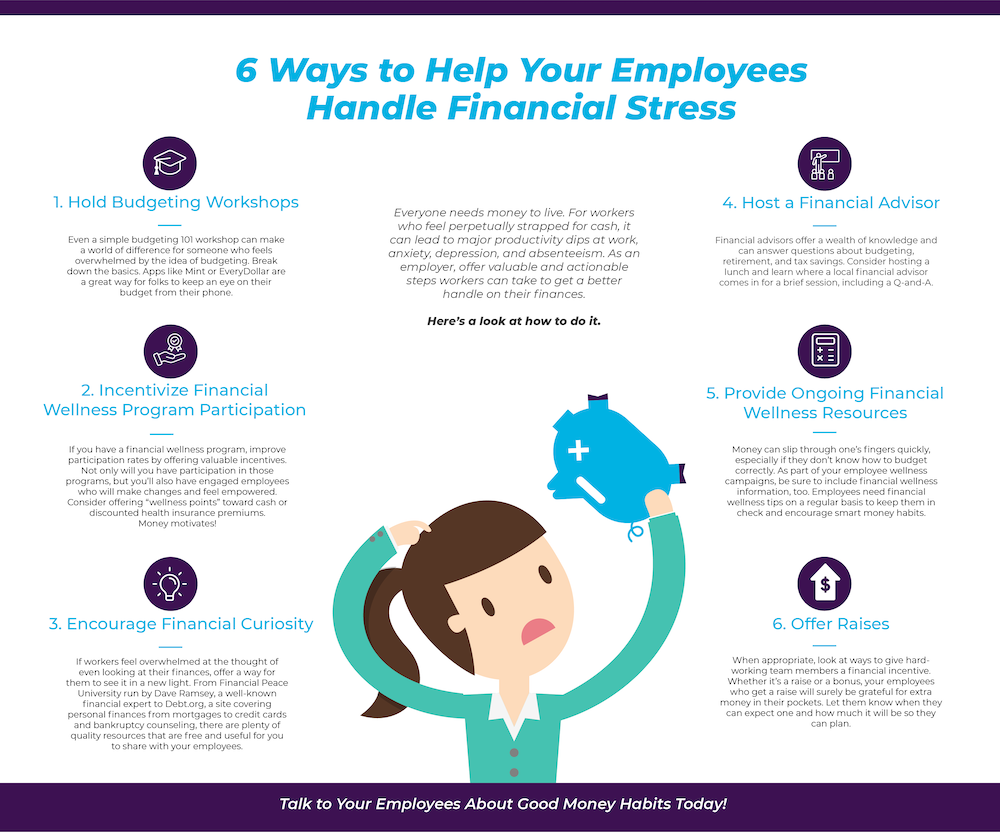
1. Bring in the right pro for one focused question: Pick the pressure point (cash flow, debt, insurance, taxes) and book a single-purpose meeting with a fee-only financial planner, nonprofit credit counselor, or your benefits/HR team. Arrive with your top three questions and one page of numbers so you leave with a short action list, not more information to “think about.” If you’re considering a life settlement for liquidity, ask specifically how the lump sum would be used, what fees/taxes to expect, and what alternatives (loans, withdrawals, downsizing) look like side-by-side.
2. Complete a 60-minute financial inventory (no judgment, just facts): List monthly take-home income, minimum debt payments, and essential bills; then pull your last 60–90 days of statements to see where money actually went. Start with the largest categories because they move the needle fastest, the three biggest household expenses are housing, transportation, and food. End the inventory by writing down your “must-pay-by” dates and any accounts that are past due so you can prioritize stability.
3. Build a “boring” budget you can keep for 30 days: Use a simple structure: essentials, financial obligations (minimum debt, insurance), and a small “life” line item so the plan doesn’t feel like punishment. Give every dollar a job at payday, then do two 10-minute check-ins each week to adjust before you overdraft or swipe a credit card. If irregular income is an issue, budget off last month’s lowest paycheck and treat extra income as a buffer.
4. Create a short planning map: stabilize, then grow: On one page, set three time horizons: 7 days (stop late fees, call lenders), 30 days (one balanced budget cycle), and 90 days (one measurable goal like a $500 starter emergency fund or a debt payoff milestone). This is where step-by-step progress matters; research suggests people who fulfill their needs step by step can reduce the risk of getting overwhelmed by financial difficulties. A planning map also helps you decide whether a one-time cash option (like a life settlement) solves a short-term gap or supports a longer-term reset.
5. Use a targeted debt-reduction playbook (not random extra payments): First, get current on essentials; then choose one method for extra cash: pay highest APR first (saves the most interest) or smallest balance first (builds motivation). Call creditors to request a hardship plan, rate reduction, or due-date change, script it, take notes, and ask what they can offer if you commit to autopay. If collections are involved, pause and verify debts in writing before agreeing to anything.
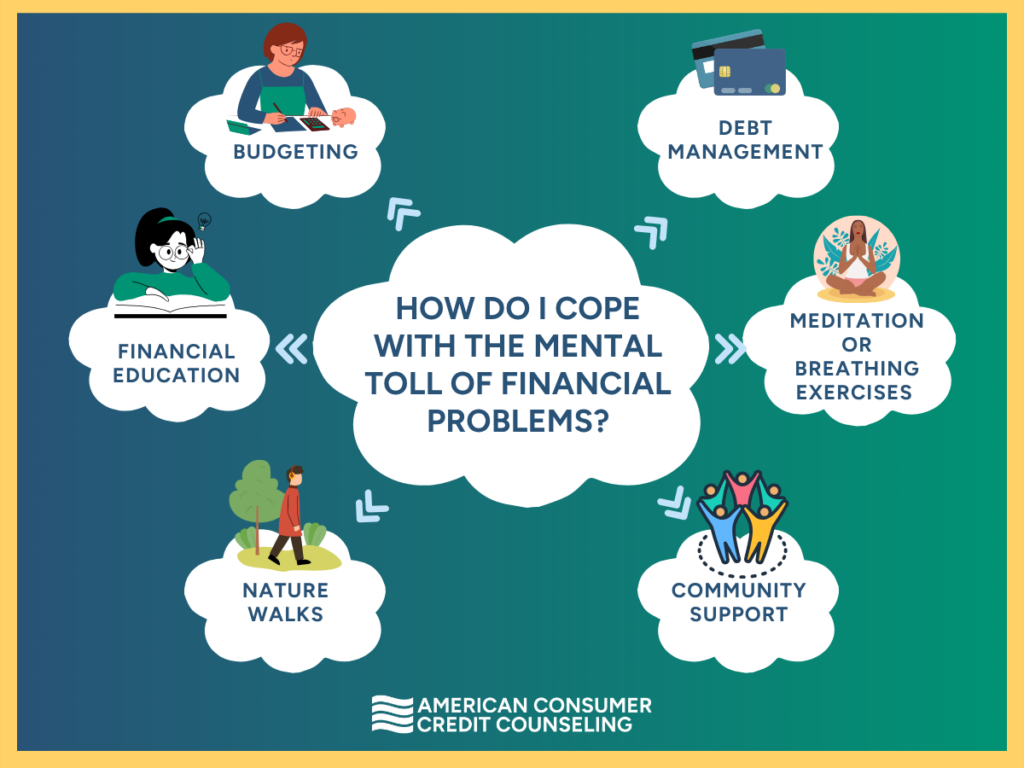
6. Add a 5-minute “stress reset” to your money routine: Pair money actions with a nervous-system downshift so your brain stays online for decisions. Before you open your banking app, do one minute of slow breathing; after your check-in, write the single next action (“Pay electric bill Thursday” or “Call lender at lunch”). Keep an “anxiety protocol” card in your wallet: two grounding steps, one supportive person to text, and one financial task that’s safe to do even when you’re stressed.
A routine like this won’t eliminate money stress overnight, but it will make your next decision more rational, more informed, and less fueled by panic.
Money Stress and Mental Health: Common Questions
Here are quick answers to common money-anxiety concerns.
Q: What if I feel panicky every time I check my bank account?
A: Start with a 60-second reset before you open any money app: slow breathing, then name one tiny task you can complete. Keep the session short and goal-based, like “confirm the next due date” or “pay one minimum.” If panic spikes, stop and switch to a grounding activity, then return later.
Q: How do I know when financial stress is affecting my mental health?
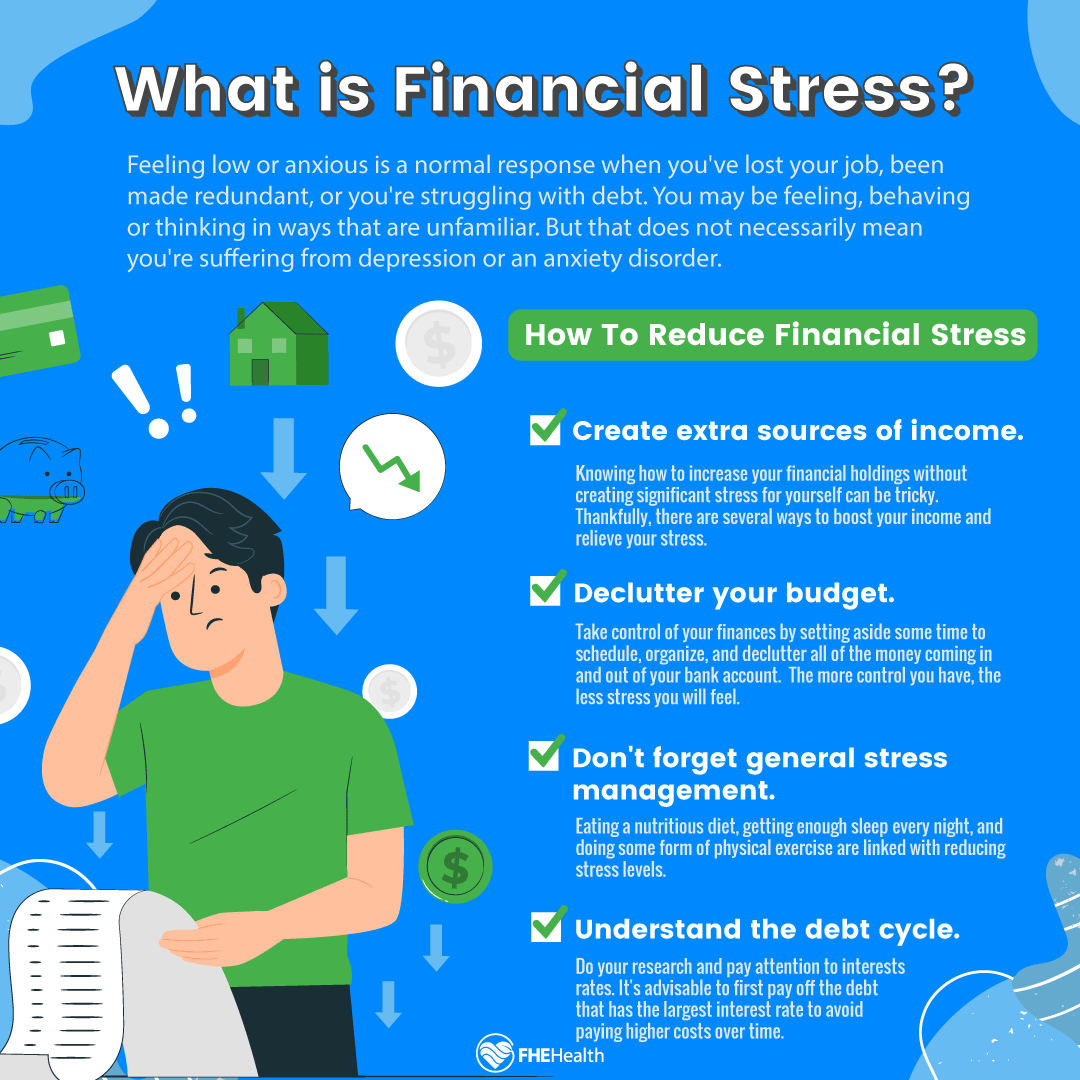
A: Watch for sleep changes, irritability, constant worry, avoidance, or using spending as relief. This is common, not a personal failure, and Americans report financial stress at very high rates. Consider talking to a clinician if symptoms last more than two weeks or interfere with work and relationships.
Q: What should I do first if I’m behind on bills?
A: Stabilize essentials first: housing, utilities, food, transportation to work, and medications. Call each provider, ask for a hardship plan or due-date change, and write down the agreement. Pay the minimums you can keep consistently, then build from there.
Q: Can I reduce debt without obsessing over every purchase?
A: Yes. Choose one simple payoff approach and automate the minimums so you are not deciding daily under stress. Then add one planned extra payment per month when cash allows, even if it’s small.
Q: When should I get outside help, and who should I contact?
A: Get help when you are missing payments, dodging mail, or arguing about money constantly. A nonprofit credit counselor, benefits or HR team, or a fee-only planner can help you prioritize and negotiate. If debt feels emotionally heavy, remember 46 percent of people with debt also have a mental health diagnosis, so combining financial and mental health support can be powerful.
Small steps count, especially when you repeat them on hard weeks.
Choose One Financial Step That Eases Stress and Supports Well-Being
-
When bills, debt, and uncertainty pile up, managing financial stress can feel like it’s running your life and draining your focus.
-
The steadier path is a practical mindset: apply financial planning, use strategic financial health tips consistently, and treat money decisions as part of improving mental well-being, not a separate chore.
-
Over time, clarity replaces scramble, and long-term stress reduction becomes more realistic because the next move is defined. Small financial choices, repeated consistently, create emotional breathing room.
-
Choose one next step today, set a simple plan, review your budget, or make a debt-reduction move, and write it down. That follow-through builds stability and resilience that protect health and performance long after the immediate pressure passes.
0 Comments